
One Race–Many Ethnic Groups
The growing Socialist/Marxist revival in Western nations does not follow Karl Marx’s original plan.
Marx taught that history is a continuous conflict between the wealthy (the bourgeoisie) and the working class wealth (the proletariat). Twentieth century socialists tried to stir up that narrative in the USA. It didn’t work.
In the 21st century, socialist/Marxists (like New York mayor Zohran Mamdani) are advancing their cause with different “opponents.” They say the struggle is not primarily about economics. It’s about race–whites versus people of color.
That’s a lie.
The human race is the only one on planet earth.
One Race–Many Ethnic Groups
I said for many decades that I was “color blind.” People were people. But some folks said “I didn’t get it”–that we all look down on “other races” in various ways.
Here’s an article by an African American woman that confirms my colorblindness.
From the Bible.
GUEST AUTHOR (slightly edited)
The One Biblical Truth Christians Are Missing in the Race Debate
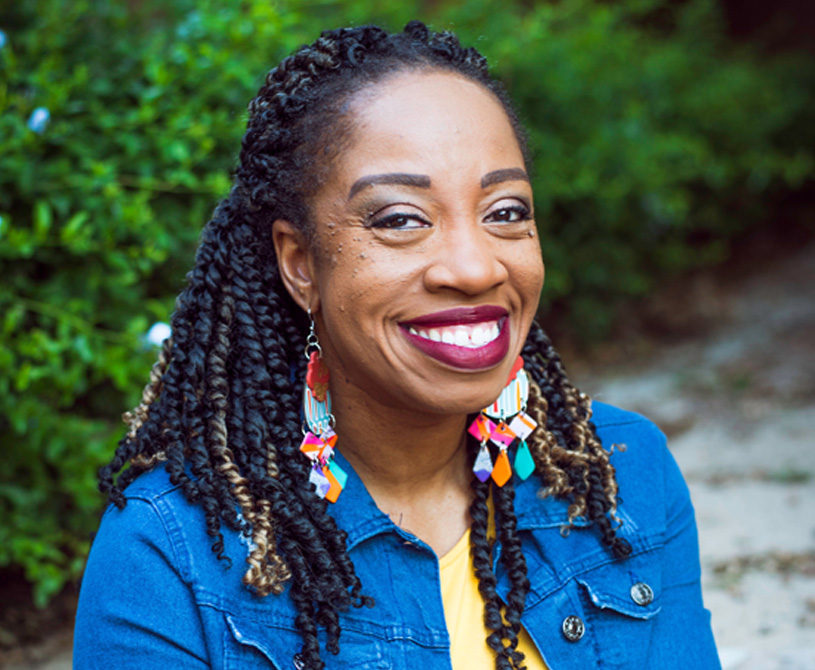
By Chantal Monique Duson
Ever since the summer of 2020, particularly in the aftermath of George Floyd, significant confusion has spread among sincere believers in Jesus, many of whom have been trying to navigate conversations about race and justice.
The crux of the problem is that Christians are being asked to speak about race using categories that Scripture never gives us and far too few people discern the ideological forces that are at work.
The pressure to adopt and incorporate racial categories is not limited to secular workplaces or universities. It has been happening in churches, seminaries, Christian institutions, and even around family dinner tables. This often looks like the demand to affirm BLM, stand against systemic racism (with little if any definition of what that entails), the requirement to acknowledge all racial disparities as unjust, or the pressure to notice your own participation in racist acts.
This pressure is the outworking of what is called critical race theory, and in recent years, it has made insidious incursions into our churches. Pastors affected by this feel this same pressure to adopt secular language to appear compassionate to both congregants and the culture. Parents worry about what their children are being taught in schools and churches. Christian organizations increasingly speak in and cater to ideological frameworks that would have been wholly unfamiliar to believers a generation ago.
After years of podcasts, debates, and public controversy, many Christians still do not know how to think biblically about these issues, and the confusion remains. That is why the Center for Biblical Unity crafted the “Los Angeles Statement on Race, Justice, and Unity”— because the Church desperately needs clarity rooted in God’s Word, not unstable academic theories or poorly defined terms rooted in cultural grievances. The truth is, we must embrace ethnicity but reject “race.”
While confusion abounds, two issues in particular continue to contribute to this distortion of the Gospel. First, the problem begins with a word most people rarely stop to examine:
Race.
The modern concept of race is not a biblical category or a biological reality. It is a social construct developed a few hundred years ago to classify and rank people based on physical traits, particularly skin color. Historians and scientists have acknowledged that so-called racial categories are socially constructed rather than scientifically based. The Human Genome Project found that all humans are more than 99.9% genetically alike.
In other words, we are one race.
More importantly, Scripture does not divide humanity into racial groups. The Bible teaches that all people descend from one man, Adam (Acts 17:26). Every human being bears the image of God (Gen. 1:26–27). The diversity we see among people groups–skin tones, facial features, hair textures, languages, and cultures etc. reflects God’s providence, not a hierarchy or determinant of human value or worth.
When Christians uncritically adopt the culture’s terms and definitions, ideas such as using race-based language or racial categories to interpret fundamental human distinctions often reinforce the very divisions we claim to stand against. The idea of “race” as we have come to understand it in a contemporary sense is foreign to Scripture. Instead, the Bible presents two primary realities: humanity united in Adam and redeemed humanity united in Christ (Rom. 5:12–19).
To be sure, Scripture does, in fact, recognize ethnic and national distinctions. The beginning chapters of Revelation speak of tribes, nations, peoples, and languages — all worshipping around the throne. Pentecost also reveals the broad ethnic diversity that has been in the Church since the beginning.
God’s people are a diverse group–and we always have been.
Ethnicity is a legitimate biblical concept, rooted in the Greek word ethnos, which refers to nations or people groups. Christians do not need to erase culture, ancestry, or heritage to pursue unity. The beauty of the Church is displayed through redeemed people from many backgrounds worshiping together as one family. Additionally, culture, ancestry, and heritage must also remain within their proper place — under the lordship of Christ.
Embrace the unity Christ has already won for us.
The second issue strikes at the heart of the Gospel which is that Jesus Christ has already done everything necessary to make cultural enemies into a family. In Christ, all ethnic, cultural, tribal, and linguistic dividing walls have been torn down (Eph. 2:14–16). In Him, all genuine believers are already members of one household (John 1:12).
We are family.
That familial unity is not symbolic or sentimental; it’s universal. It is a spiritual reality made visible through local churches, friendships, marriages, and communities shaped by the love of Christ, locally and globally. Reconciliation is already our current reality, not a destination to be achieved through human works.
Does this mean that there will never be disagreement or offense? No. But Scripture offers us a better outline for maintaining unity than culture has. The culture strives for unity. The Church maintains what she has been given in Christ.
Christians thus have the freedom to pursue fellowship across ethnic and cultural lines, not because diversity itself is a modern social ideal, but because Christ has already made us family. And ironically, when Christians stop obsessing over skin color as the defining marker of diversity, we become better able to appreciate the true beauty of Christ’s bride in all of her rich diversity in culture, age, language, socio-economic status, and more.
America will not overcome division through pithy slogans, social media posts, or more DEI trainings. The Gospel is enough. We call believers back to the authority of Scripture and the beauty of our familial unity in Jesus. The world is confused and fracturing. Christ has accomplished what no protest, policy, or human effort ever will–unity with God and unity with our fellow human beings.
We must proclaim this truth with courage and clarity. Worldly division will not be bridged by better politics or a muted Christianity. It will only be solved by the one who conquered sin and death.
Jesus shows us a better way.
Chantal Monique Duson is the co-founder and President at the Center for Biblical Unity. She has a background in social service and children’s ministry. She worked as a missionary to South Africa serving children and teachers impacted by drugs, violence, and trauma. She spent two decades advocating for Critical Race Theory (CRT), but through a series of events, began to see the contradictions of CRT with a biblical worldview. Monique has a BA in Sociology from Biola University and is working on a MA in Public Theology at Birmingham Theological Seminary.


A black friend of mine coined an astute phrase: “Race is a pigment of your imagination”.
That’s a great one, Steve. Amazing how words can be twisted for evil ends.
Ron
As an early mentor of mine at PSNS would say, right on, right on, right on!
Good to hear from you, Don. Are you coming to the “trifecta” reunion (SK Forever!) September 25,26?
Let’s chat about it. (360) 888-6931
Ron