
Freedom
The Collateral Blessings of Trump’s Triumph
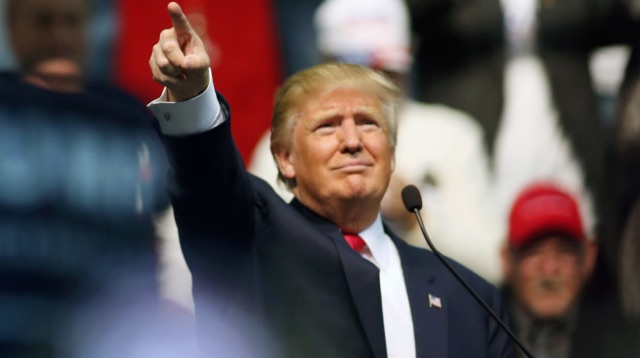
It appears that the “bomb” that is Donald Trump has dropped on America. Some like Madonna are still in mourning and dis-belief. Others are encouraged that the secular progressive momentum has been halted (for now) and possibilities for renewal exist.
Through the 2016 elections I believe the United States has been given hope in a number of unusual categories.
Let’s examine the collateral blessings of Donald Trump’s triumph. Read More
Yes, Virginia, There’s a God in Heaven
 Every Christmas Day, our local area newspaper publishes an editorial that is titled “Yes, Virginia, There is a Santa Claus.” It was written many decades ago to remind a young girl that Santa Claus is real and it is okay to believe in him.
Last night’s stunning and historic American presidential election brought those words back to my own heart and mind–with a little twist.
Prayers were answered. A miracle happened.
Yes, Virginia, there’s a God in heaven. Read More
What the Presidential Tickets Tell Us About America
 Tonight, the first woman in American history to represent her party for president of the United States–Hillary Rodham Clinton–will make her acceptance speech before the Democratic National Convention.
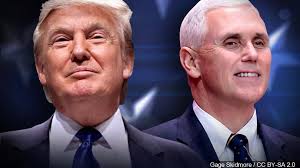
Last week, the Republicans nominated the first non-politician/non military person–businessman Donald Trump–to head a presidential ticket. Trump chose Indiana governor Mike Pence as his running mate and Hillary Clinton selected Virginia senator (and former governor) Tim Kaine as her VP.
The presidential tickets are now set and in fourteen weeks, we with choose our 45th chief executive.
What do this year’s choices tell us about America?
We need to be constantly reminded that we live in a brief corridor of history where people pick their leaders. Abraham Lincoln called it “government of the people, by the people, and for the people.”
In other words, we are the government. We vote for our leaders, they represent us in enacting and enforcing our laws, and those laws are meant to benefit the people. That formula–“people power”–is what made America (among other things) a very exceptional nation.
It was not always so.
On a recent trip to Asia, I read a book called The Story of the World, Part I by Susan Wise Bauer. It gives a fascinating portrayal of the broad strokes of history–from the beginning of time to the end of the Roman Empire (Part II covers the Middle Ages to the present).
If any one thing characterized life during the past seven thousand years, it was this:
Despots. Tyrants. All powerful kings.
The Bible mentions Nimrod and Babel. Then came Sargon in Sumeria, the Pharoahs in Egypt, and numerous Babylonian and Assyrian dictators. For a brief time, Greece and Rome returned some power to the people in their early city-states, but eventually they fell to the likes of Alexander the Great and numerous Caesars.
In other parts of the world it was the same story. Whether India, China, or the ancient New World, warrior chiefs or strong men rose to the top of their tribes and ruled their societies. As I read chapter after chapter of The Story of the World, it struck me that most people in history lived in daily fear of being wiped out by the nearest tribe, chieftain, emperor or strong man and lived their lives doing what the dictator told them to do.
Elections and freedom didn’t exist.
Until America.
Of course, hundreds of years of the development of Christian civilization in Europe paved the way. As European people came to Christ and began reading and applying the Bible to everyday life, human rights rose in people’s hearts and rulers began to be replaced by laws.
For 6500 years it was Rex rex–the King is king (you do what he says). But, over the past five hundred years, humankind took a giant leap.
Lex rex. The Law is king (Do what the people want).
America was the world’s first biblically-oriented society that put that truth into governmental form.
This Sunday night, I encourage you to watch Bill O’Reilly’s Legends and Lies docu-drama on the Fox News Network. For the past two months it’s been the most watched weekend program in the nation. It chronicles the truths and myths behind the American Revolution. This week it will focus on America’s first president, General George Washington.
For those of us who’ve enjoyed free elections for the past 230 years, it’s hard to believe that many early American colonists wanted to make George Washington the first king of the colonies. Why? Because kings were all they’d ever known (throughout history). And kings were often tyrants–just like King George of England.
Human beings had always been dominated by strong men.
America exceptionally led the world into freedom by rejecting power at the top and giving it to a “moral and religious people” (John Adam’s words) who would govern themselves through laws made and enforced by their representatives.
“Government of the people, by the people, and for the people.”
That was the essence of the American Revolution. It was an idea that changed the world.
In the 6500 years of “dictator” history, kings did not always reflect their subjects. Good societies could be led by evil tyrants or vice versa. Occasionally in history God used good leaders to bring renewal to the people (David, Hezekiah and Josiah et al). Other times, bad rulers were a sign of judgment to a back-slidden nation (e.g. Manasseh, Nebuchanezzar).
In modern free societies who elect their leaders, there’s a clearer correlation between magistrates and people. Good people (moral and religious) generally vote for righteous leaders. Bad societies (immoral and selfish) usually vote for narcissists like themselves.
Thus, leaders of free voting nations are “mirrors of the people.”
So, what do the two presidential tickets tell us about the American people in 2016?
1. A majority of Americans (or an influential minority of those who vote) are atheists or secularists. This is the first election in post-Christian America. Neither Donald Trump nor Hillary Clinton (despite what they say) are anchored to biblical truth. Trump is a populist bully and Clinton is a corrupt, career politician. One’s a bellicose outsider and the other is a sleazy insider. The majorities of both parties voted for these man-centered politicians–telling you much about themselves.
2. A good portion of the American electorate is angry–not a great virtue. Trump supporters want strength and less government. Their strongest moral value is work ethic = I can do it myself. This is Trump’s message and that of his impressive children. It’s not “I can do all things through Christ” (Ephesians 4:13) but rather “I can get it done if I work hard enough.”
Clinton supporters are just as self-oriented, but from the opposite tack. They want America to be weak in the world and receive as many entitlements as they can get (free health care, college tuition, etc.–hey, why don’t we throw in free cars and mortgages?). Bernie Sander’s audiences epitomized this nanny state consumerism. Their message is: “You do it for ME!”
Each of these candidates represent flip sides of the same coin of self. It’s either protect me or give me. Both ideas will erode the power of liberty in the American nation.
3. Mike Pence and Tim Kaine represent America’s Christian past–now a minority view in the country. That’s why they’re in the second slot, not the first chair. On the Republican side, many biblically-grounded candidates were voted down in favor of the strong man, Trump. Pence is a sound evangelical who would have made a fine president. He’s “Christian, conservative and Republican” in that order. Time Kaine is a former Catholic missionary who’s personally pro-life–kind of a 21st century JFK.
Both were chosen because Trump and Clinton recognize their need for the “God-vote” in the country to put them over the top. In truth, I’d love to see both Donald Trump and Hillary Clinton step down and let Pence and Kaine run for the highest office in the land. Their match-up would be worthy of our heritage. Unfortunately, in 2016, they are just a faint echo of a once Judeo-Christian, freedom-loving society.
4. Hillary Clinton probably has the edge because those who want free stuff are more united than those who want to be protected. Even with the splinter of the Sander’s insurgency, Democrats tend to coalesce around their standard bearer (90%). This year, due to Trump’s obvious faults, Republicans are in the 70% support range. That probably means a third Obama term and accelerating American decline.
Look in the mirror, America! These four faces are staring back at you:
- God-loving and fearing conservatives. (Pence)
- Religious moderates (Kaine).
- Angry pragmatists – Trump-eteers, and
- Angry narcissists – Clintonites
But anger is at the top of the ticket with godly values along for the ride. How foolish we are. I wish it were Pence versus Kaine. But that train has left the station in 2016.
Keep praying for God’s break-out among our “leaders”–we, the people.